
Erosion Under Downspouts: Fixes for Steep Mountain Yards
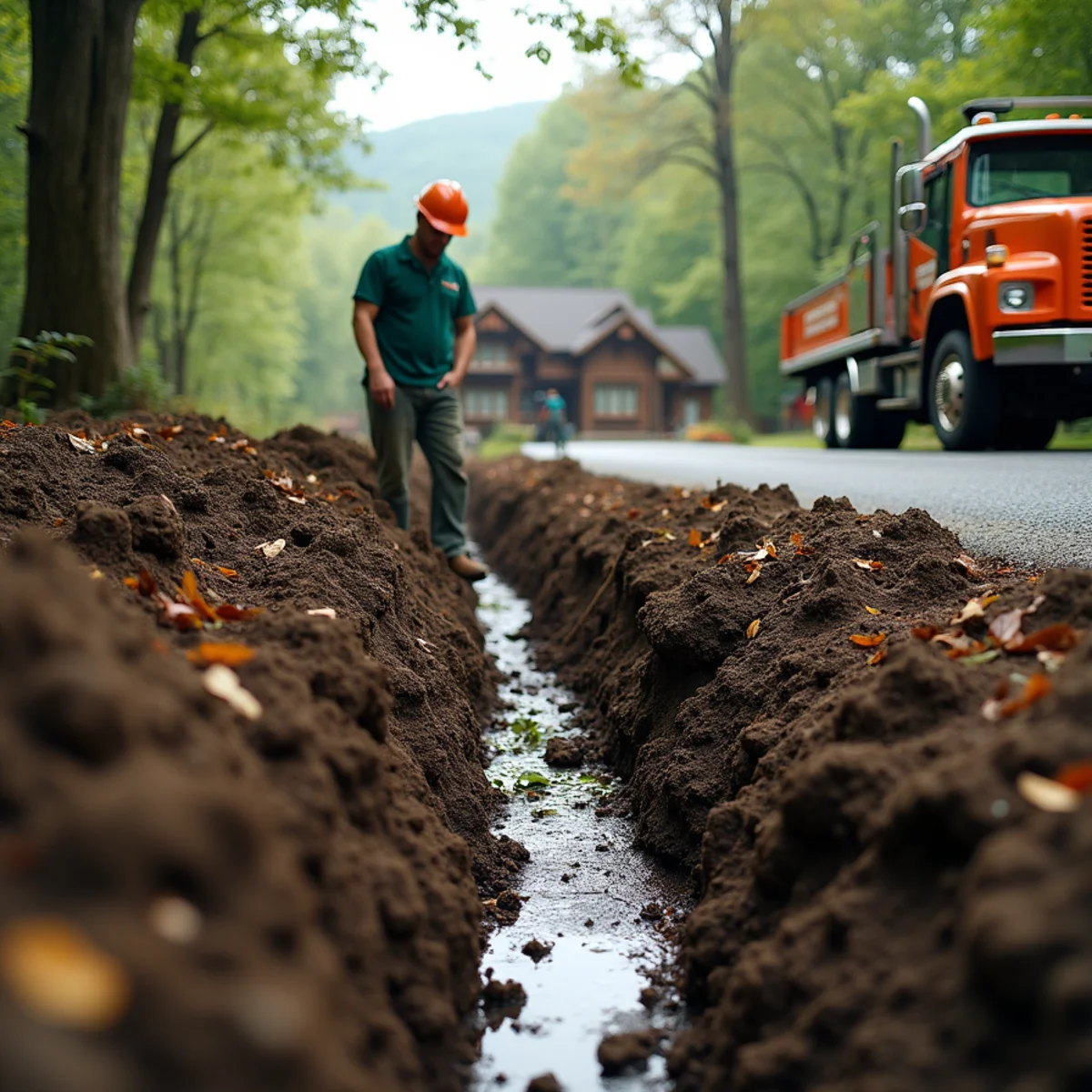
The Mountain Slope Hazard: How High-Velocity Downspout Water Destabilizes Hillsides
Living on a hillside or mountain ridge in Western North Carolina offers breathtaking panoramic views, but it also introduces severe terrain vulnerabilities. On steep mountain lots across Mitchell, Avery, and Watauga Counties—including Bakersville, Spruce Pine, Newland, and Foscoe—gravity is both an ally and an adversary. When thousands of gallons of rainwater collected by your roof are funneled into downspouts and discharged directly onto unmanaged hillside soil, the resulting erosion can be catastrophic.
A single downspout draining a 600-square-foot roof section discharges approximately 375 gallons of concentrated water during a 1-inch rainstorm. During intense tropical downpours or multi-day mountain cloudbursts, that volume surges into thousands of gallons. Discharging that sheer volume at high velocity onto steep loam and clay soils instantly strips protective ground cover, gouging deep trenches, exposing delicate foundation footings, and washing out gravel driveways.
At W.P.E.S. LLC, owner Wyatt Phelps specializes in engineered slope drainage solutions. Stopping erosion under downspouts requires controlling water velocity, routing flow through non-erodible conduits, and dissipating hydraulic energy safely away from structural foundations.
Why Plastic Splash Blocks and Short Extenders Fail on Steep Grades
On flat suburban lawns, a 2-foot green plastic splash block or a flexible accordion extension might keep water a few feet from the basement. On a 15-to-30-degree mountain slope, however, these temporary products fail completely.
Here is why standard splash blocks fail on mountain properties: 1. Displacement Under Hydraulic Force: During heavy rain, the torrential velocity of water exiting an oversized 3x4-inch downspout simply washes lightweight plastic splash blocks down the slope like sleds. 2. Undermining and Soil Tunneling: Water pouring off the end of a 24-inch splash block hits bare soil with concentrated impact. It excavates a hole directly at the toe of the block, undermining the dirt beneath it until the block tips backward, dumping water straight against your foundation wall. 3. Slope Gully Acceleration: Accordion flex-tubes placed on surface grass focus thousands of gallons into a single narrow jet at the tube exit. That jet acts like a hydraulic pressure washer, carving a knee-deep gully down your lawn in a single thunderstorm. 4. Mower and Winter Damage: Surface tubes get shredded by weed trimmers, crushed by lawn tractors, and buried or ripped away by winter snow slides off metal roofs.
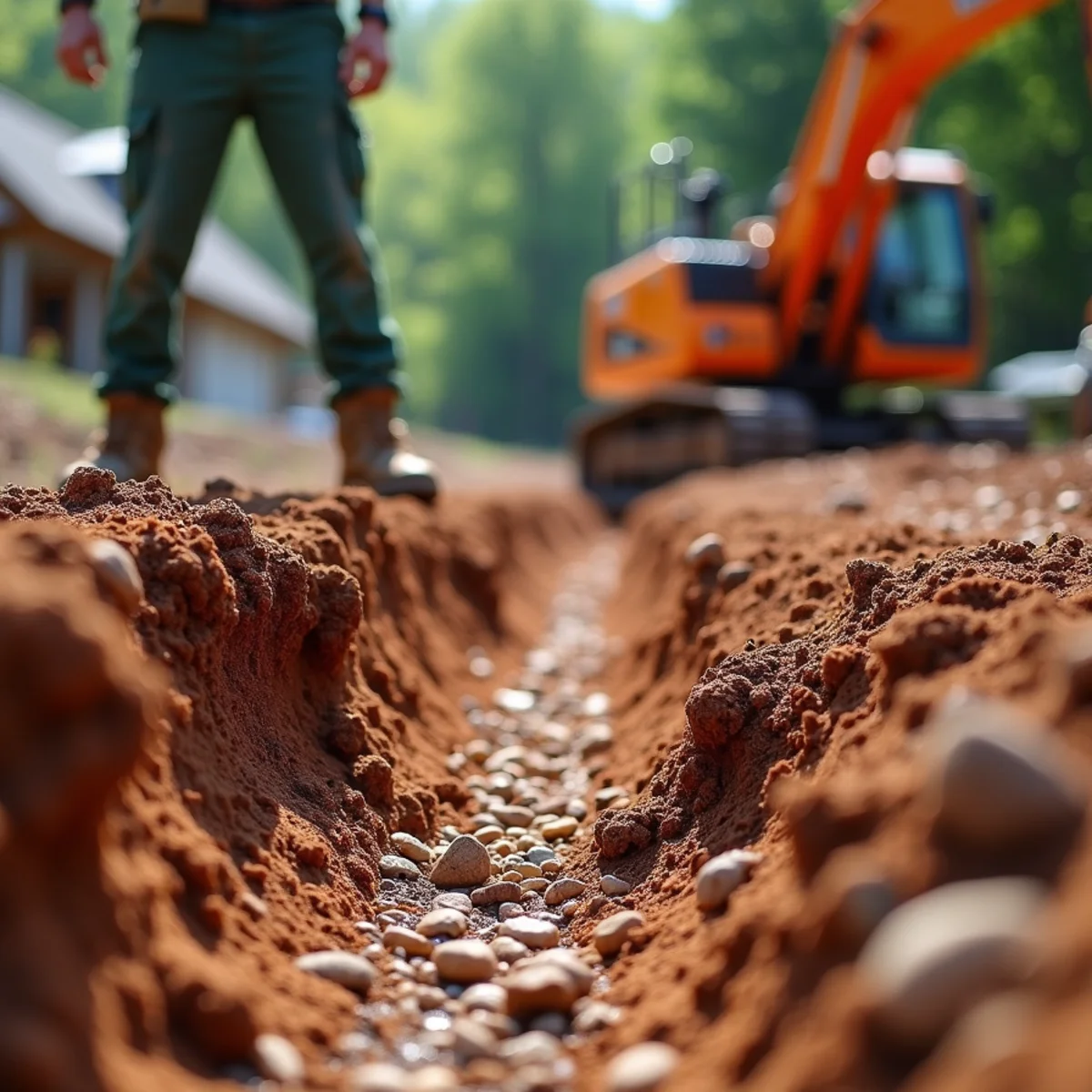
The Hydraulic Mechanics of Gully Formation in Western North Carolina Clay
Understanding why mountain slopes erode so violently requires understanding the soil composition of the Blue Ridge mountains. High Country soils typically consist of a thin top layer of rich, porous forest loam (2 to 6 inches) sitting directly atop dense, impermeable saprolite red clay.
When a concentrated downspout stream strikes topsoil, it quickly saturates the porous loam. Once the loam is fully liquefied, incoming water cannot penetrate the hard clay layer below. Instead, it sheet-flows horizontally along the boundary between topsoil and clay.
As gravitational momentum builds down the hillside slope, the water's kinetic energy increases exponentially. It strips the loam away in sheets, exposing raw red clay. The water then cuts vertical rills into the clay, which rapidly merge into deep erosional gullies. Left unchecked, this 'headward erosion' eats backward toward your home, undermining retaining walls, cracking concrete patios, and washing away structural foundation soil.
Engineered Slope Solutions: Underground Rigid PVC Conduits and Energy Dissipation Basins
To permanently stop hillside erosion, downspout water must be completely removed from the ground surface until it reaches a designated, stabilized discharge point. W.P.E.S. LLC designs and excavates below-grade drainage networks engineered specifically for steep topography:
1. Smooth-Wall Schedule 40 & SDR 35 PVC Piping: We refuse to install thin-wall black corrugated flex-tube, which easily crushes, catches silt on its internal ribs, and ruptures under slope settling. We bury rigid, smooth-interior PVC pipe beneath lawn lines, maintaining continuous positive slope to move water at high velocity without internal turbulence.
2. Inline Debris Filters & Cleanouts: We install cleanout risers at the base of every downspout to capture roof grit and allow easy flushing.
3. Energy Dissipation Basins: At the discharge point downhill, releasing high-velocity water directly onto grass will restart erosion. We excavate an Energy Dissipation Basin—a sunken catch area lined with heavy non-woven geotextile filter fabric and filled with heavy 4-to-8-inch crushed surge stone or river cobble. The rock mass breaks the water's velocity, transforming a concentrated jet into a gentle, non-destructive sheet flow.

Dry Creek Beds, Boulder Swales, and Rip-Rap Rock Aprons: Combining Function with Mountain Aesthetics
Managing stormwater runoff on a mountain property does not mean your yard has to look like an industrial civil works project. W.P.E.S. LLC combines rugged hydrological engineering with authentic Appalachian landscape design to turn functional drainage routes into stunning property features:
- Natural Dry Creek Beds: We carve gently meandering swales lined with 8-ounce non-woven commercial filter fabric and layered with native river rock, mountain river cobble, and large anchor boulders. During dry weather, the dry creek bed serves as an attractive landscape focal point winding through rhododendrons, mountain laurels, and native ferns. During heavy storms, it safely conveys hundreds of gallons of downspout runoff down the slope without losing a single grain of topsoil. - Class I & Class II Rip-Rap Aprons: Where underground PVC pipes daylight onto steep hillside banks, we construct heavy rip-rap stone aprons. Interlocking granite stones (6 to 12 inches in diameter) absorb the exit velocity of the pipe, diffusing water harmlessly across the hillside rather than boring into soft dirt. - Pop-Up Bubbler Emitters in Boulder Rings: For manicured turf areas, we install spring-loaded pop-up emitters flush with the lawn, surrounded by a subtle ring of flat river stone that allows easy mowing while preventing soil scour. - French Drain Interceptors for Saturated Banks: In properties where hillside groundwater seeps from road cuts above the home, we integrate surface downspout piping with perforated gravel-and-pipe French drain trenches to capture both surface deluge and subterranean hillside seepage simultaneously.
Homeowner Slope Stabilization Checklist: Protecting Your Property Value
Safeguard your hillside landscape, driveway, and foundation with this practical slope management checklist:
- Map Surface Flow During Heavy Rain: Walk your property during a storm and identify where downspout runoff travels. Note any active rills, muddy streams, or exposed tree roots. - Eliminate Surface Splash Blocks on Slopes: Remove unstable plastic splash blocks and flexible accordion extenders that cause concentrated soil gouging. - Bury Conduits at Least 12 to 18 Inches: Ensure underground pipes are buried below frost and turf depth, bedded in gravel, and pitched consistently downward at a minimum of 1/8 to 1/4 inch per foot. - Plant Deep-Rooted Native Vegetation: Stabilize slopes downhill from drainage outlets with deep-rooting native mountain shrubs like mountain laurel, rhododendron, dogwood, and native switchgrass. - Inspect Retaining Wall Weep Holes: Verify that downhill retaining walls have clear weep holes so hydrostatic ground pressure does not push stone or timber walls over after heavy storms. - Maintain Rip-Rap Dissipation Aprons: Keep rock swales clear of fallen pine branches and leaves that could redirect fast-moving water around the rock barrier. - Contact Wyatt Phelps at W.P.E.S. LLC: Call (321) 485-9911 for a professional hillside drainage consultation, topographic elevation survey, and custom rock swale design across Avery, Mitchell, and Watauga Counties.
Wyatt Phelps
OwnerWyatt Phelps founded W.P.E.S. LLC in 2020 in Elk Park, NC. Serving homeowners and property managers throughout Avery, Watauga, and the Blue Ridge mountains with continuous seamless gutters, micro-mesh guards, and slope drainage.
Call Wyatt Directly: (321) 485-9911Common Questions
Frequently Asked Questions
Clear, practical answers about High Country gutters, snow loads, leaf guards, and exterior drainage.
Bury rigid smooth-wall PVC pipe to convey downspout water completely underground past vulnerable yard areas. Discharge the water downhill into a stone energy dissipation basin or rip-rap rock apron to neutralize water velocity.