
Gutter Torn Off by a Roof Snow Slide? What to Do Now
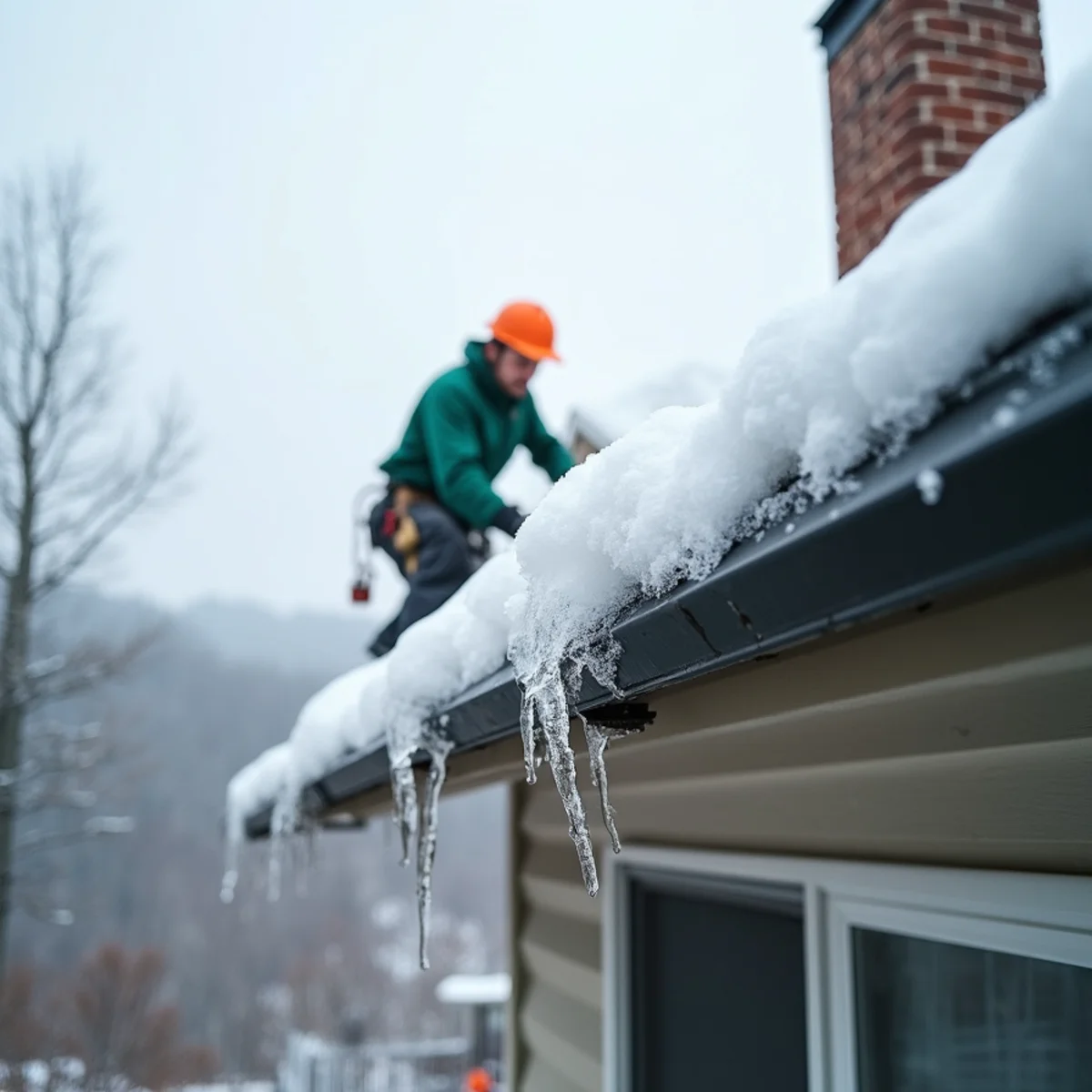
Immediate Action Plan: What to Do in the First 60 Minutes After a Roof Snow Slide
If you are reading this because a deafening roar just shook your High Country home and you stepped outside to discover your gutter system ripped off the eaves and dangling in a snowbank, take a deep breath. You are not alone. Across Beech Mountain, Sugar Mountain, Banner Elk, and high-elevation ridges in Avery and Watauga Counties, sudden snow slides off standing-seam and corrugated metal roofs are the single most common winter roofing emergency we encounter at W.P.E.S. LLC.
Your immediate priority during the first hour must be life safety, followed by water damage mitigation. Never, under any circumstances, walk or stand directly beneath an active metal roof eave while inspecting a fallen gutter. Where one snow slab just released, hundreds of pounds of compacted rime ice and snow may still be clinging to upper roof pitches, waiting for afternoon sun or vibration to trigger a secondary avalanche. Establish a perimeter and keep children, pets, and visitors far away from the drip line.
Next, observe whether the detached gutter or downspout is still physically connected to your home. In many cases, a 40-foot seamless aluminum run is ripped free from the fascia along 80% of its length but remains hanging by a single twisted corner miter or a downspout elbow. In gusting mountain winds exceeding 40 mph, a suspended gutter becomes an uncontrollable battering ram, stripping paint, smashing siding, and shattering nearby window glass. If you can safely reach the hanging section from stable ground without standing beneath the roof eave, anchor or detach the loose end. If the gutter is suspended high above a slope or over a second-story deck, do not attempt ladder work on icy ground. Call Wyatt Phelps at W.P.E.S. LLC at (321) 485-9911 for emergency stabilization.
The Physics of Mountain Snow Slides: Why Standing-Seam Metal Roofs Avalanche
To understand why your gutter system failed, it helps to understand the unique physical forces at work on High Country metal roofs. Standing-seam metal roofs are widely favored across Western North Carolina for their longevity, fire resistance, and superior shedding of rain and snow. However, their ultra-smooth painted Kynar or Galvalume finish creates a virtually frictionless surface once a microscopic layer of meltwater develops.
Throughout cold winter days, indoor household heat escapes through ceiling joists, attic bypasses, and uninsulated can lights, warming the underside of the metal roof deck. When outside ambient temperatures hover in the mid-twenties, this thermal transfer warms the bottom layer of snowpack just enough to liquefy it. That thin film of liquid water acts as a high-pressure hydraulic lubricant. Simultaneously, heavy snow accumulation—often 12 to 24 inches of dense, water-logged rime snow weighing 15 to 25 pounds per cubic foot—builds tremendous gravitational momentum on 8/12, 10/12, or 12/12 pitch mountain rooflines.
When the snow mass overcomes friction, thousands of pounds of snow and ice break free instantaneously. This roof avalanche behaves like a solid glacial slab traveling at high velocity. As the snowpack rockets off the eave, its sheer downward momentum creates extreme shear forces. If gutters were mounted even an inch too high, or fastened with outdated nail spikes rather than commercial internal screw brackets driven into rafter tails, the avalanche strikes the outer lip of the gutter, shearing fasteners and ripping the entire aluminum run down in a split second.
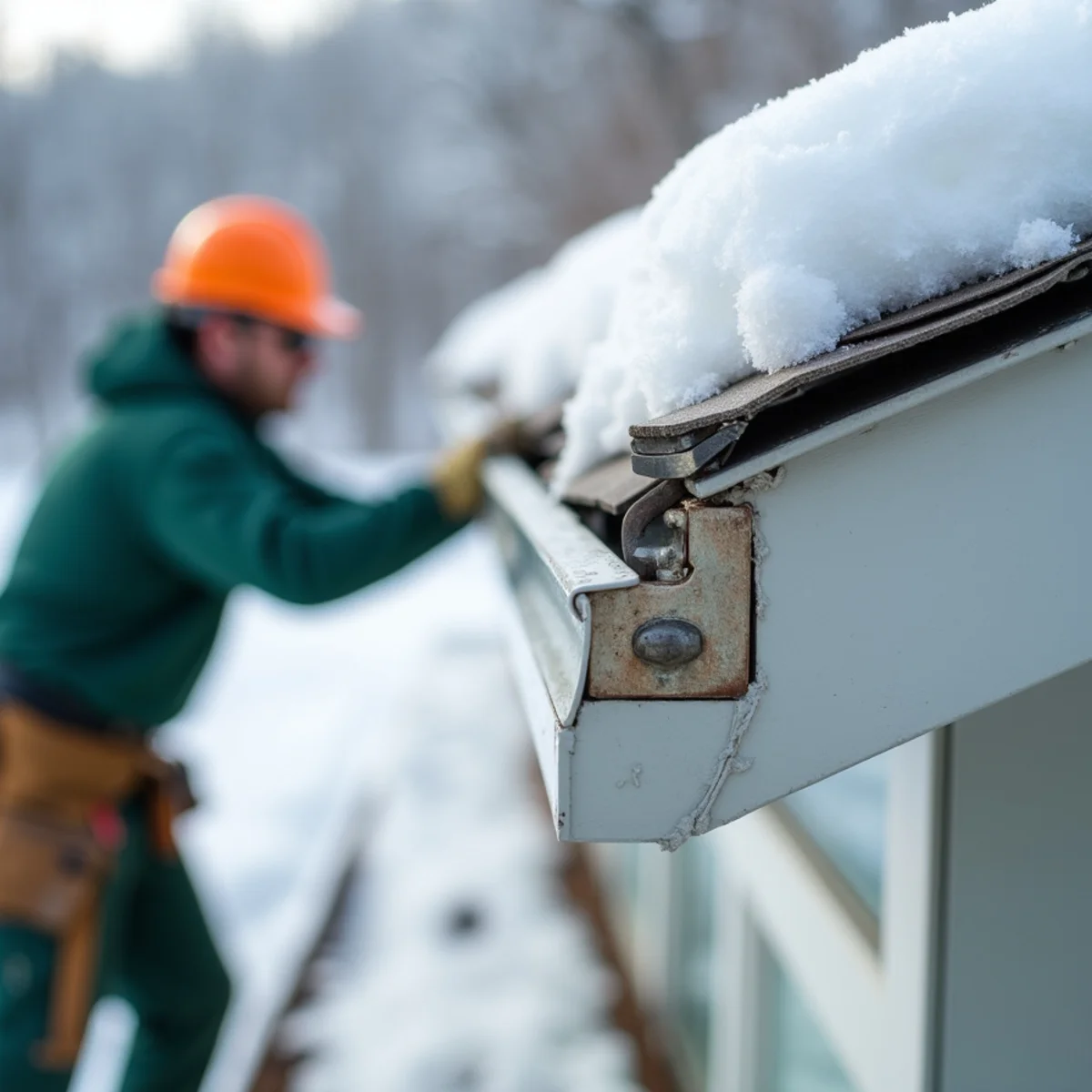
Assessing Secondary Structural Damage: Fascia Boards, Soffits, and Drip Edges
A snow slide rarely destroys just the gutter trough itself. As the gutter is ripped downward and outward by the weight of the snow, the mechanical leverage exerted on the roof eave frequently damages three critical architectural components:
1. Structural Fascia Boards: In many older High Country homes, gutters were installed using 7-inch aluminum spikes driven through ferrules into 1x6 primed pine fascia boards. When a snow slide strikes, these spikes act like pry bars, splitting the wood fascia along the grain or tearing the entire board clean off the sub-fascia framing. If the wood behind the gutter was already soft from minor roof leaks or previous moisture exposure, the board will splinter into fragments.
2. Metal Drip Edge & Starter Shingles: Continuous seamless gutters are designed to tuck neatly under the metal roof drip edge flashing to prevent water from wicking behind the trough. When snow drags the gutter down, it often hooks the hemmed lip of the drip edge, twisting and crumpling the perimeter metal flashing. This leaves the edge of the roof decking exposed to wind-driven rain and meltwater.
3. Soffit Panels & Rafter Tails: On homes with vinyl or aluminum ventilated soffits, a violent gutter detachment can buckle soffit channels, exposing attic cavities to freezing drafts, blown rime ice, and nesting wildlife. During our comprehensive on-site emergency inspections, W.P.E.S. LLC examines not just the twisted aluminum on the ground, but the structural integrity of your rafter tails, sub-fascia, and soffit ventilation.
Emergency Winter Triage vs. Permanent Heavy-Duty Mountain Reconstruction
When a gutter rips off in the middle of January, homeowners often ask whether a full replacement can be executed immediately or if temporary winter measures are required until spring thaw. The answer depends on local weather conditions, active ice accumulation, and the extent of underlying fascia damage.
If roof eaves are heavily encrusted with thick ice dams and high snowdrifts, forcing a new gutter installation in sub-zero weather risks poor sealant adhesion and hazardous working conditions. In such situations, Wyatt Phelps executes an Emergency Winter Triage protocol: - Safe removal of hanging, damaged metal remnants to eliminate wind and fall hazards. - Temporary weatherproofing of exposed fascia boards using commercial ice-and-water shield or heavy metal flashing to stop meltwater infiltration. - Directing ground-level runoff away from crawl spaces and basement foundations using heavy-duty poly sheeting or temporary diversion diverters.
Once safe weather conditions prevail, we transition to Permanent Heavy-Duty Mountain Reconstruction. We remove any compromised or split fascia boards, replacing them with solid, rot-resistant rough-sawn lumber or PVC composite trim. We reinstall heavy-gauge .032 continuous seamless gutters roll-formed on-site, tucking new drip edge flashing properly behind the rear lip.
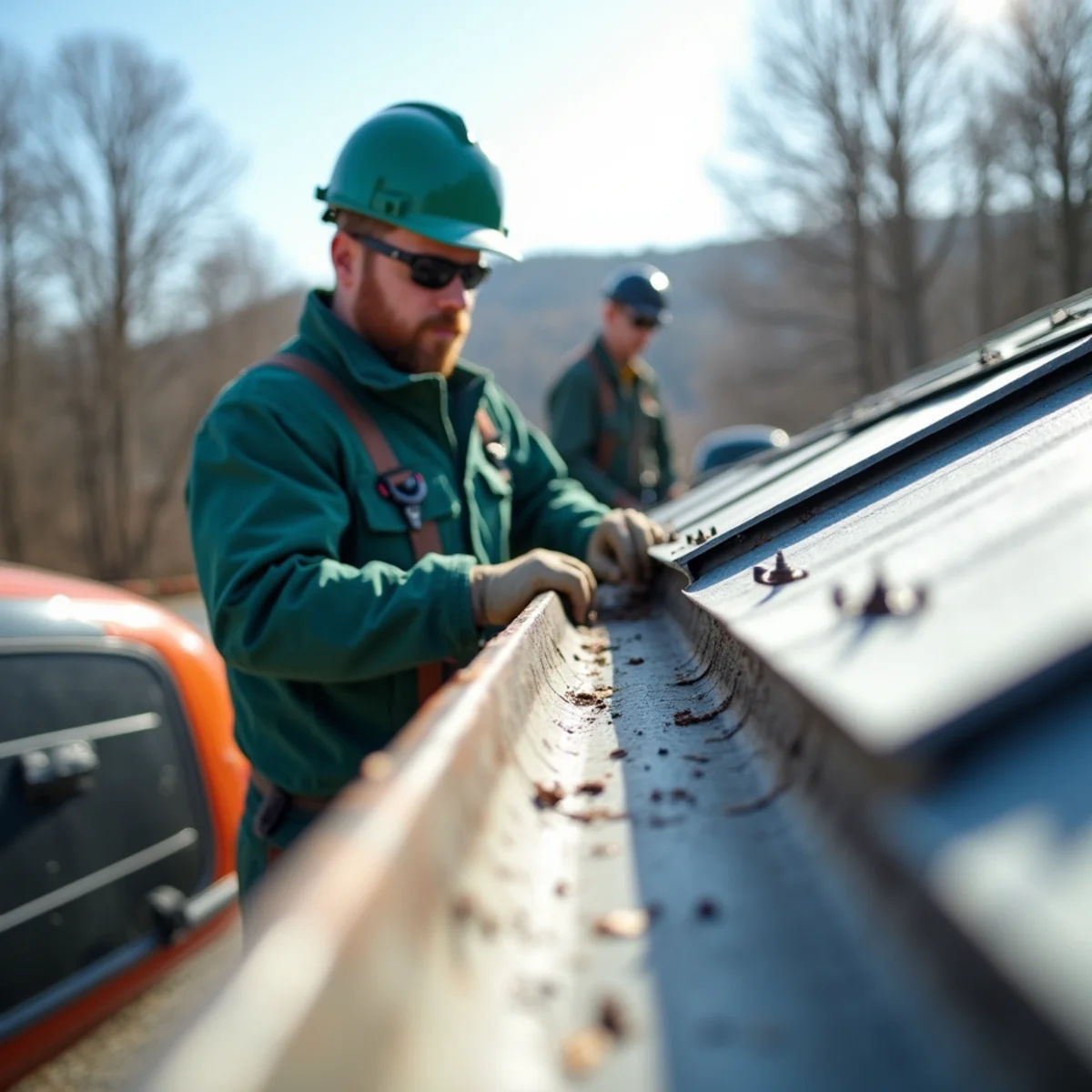
The Engineering Fix: Heavy-Duty Internal Screw Hangers & Snow Retention Systems
Preventing another catastrophic snow slide requires a two-part engineered solution: upgrading the gutter's mechanical mounting system and installing roof snow retention devices. Simply reinstalling an identical gutter the same way it was originally hung guarantees it will rip off again during the next major blizzard.
First, the gutter itself must be installed lower relative to the roof pitch slope line. On steep metal roofs, the extended plane of the roofline must clear the front top lip of the gutter by at least one-half to three-quarters of an inch. This allows low-friction snow slides to shoot over the gutter rather than slamming directly into its outer wall. Furthermore, W.P.E.S. LLC completely eliminates external spikes. We secure every trough using commercial-grade internal heavy-duty aluminum screw hangers equipped with 2-inch zinc-coated structural screws driven directly into structural rafter tails or sub-fascia on tight 18-to-24-inch centers—compared to the industry-standard 36 to 48 inches used by flatland contractors.
Second, roof snow guards are essential. Snow guards break up large snowpacks into harmless, manageable fragments or hold the snow mass on the roof until it melts gradually into the gutter trough. Depending on your metal roof style, we install: - Pad-Style Individual Snow Cleats: High-strength cast aluminum or polycarbonate snow guards adhered or mechanically fastened in staggered rows across lower roof panels. - Continuous Heavy-Duty Snow Rail / Pipe Systems: Structural extruded aluminum bars mounted across standing-seam ribs using non-penetrating mechanical clamps. Non-penetrating clamps are vital because they preserve your standing-seam manufacturer warranty by eliminating screw holes in the roof panels.
High Country Homeowner Checklist: Managing Snow Slide Risks Before the Next Storm
To safeguard your Western North Carolina mountain property against costly snow slide damage, run through this practical High Country winter maintenance checklist:
- Inspect Roofline Elevation: Verify from ground level that the outer lip of your gutter sits below the projected roofline plane so sliding snow slabs can pass cleanly over. - Check Fastener Type & Spacing: Ensure hangers are heavy-duty internal screw brackets spaced no more than 24 inches apart. If you see external spikes or 3-foot spacing, reinforce the line before winter. - Verify Standing-Seam Snow Retention: Metal roofs with pitches of 6/12 or greater must have snow guards or snow rails installed above all gutters, pedestrian walkways, heat pump units, and entry doorways. - Clear Autumn Leaves & Pine Needles Before First Freeze: A gutter filled with wet frozen debris weighs down the system, making it far more vulnerable to failure when a snow slide strikes. - Inspect Heat Trace Cables: If you operate self-regulating roof de-icing cables, test them in late autumn to ensure they provide a clear melt channel through valleys and downspouts. - Keep Emergency Contact Handy: Store local contractor Wyatt Phelps and W.P.E.S. LLC at (321) 485-9911 in your phone for rapid response in Avery and Watauga Counties.
Wyatt Phelps
OwnerWyatt Phelps founded W.P.E.S. LLC in 2020 in Elk Park, NC. Serving homeowners and property managers throughout Avery, Watauga, and the Blue Ridge mountains with continuous seamless gutters, micro-mesh guards, and slope drainage.
Call Wyatt Directly: (321) 485-9911Common Questions
Frequently Asked Questions
Clear, practical answers about High Country gutters, snow loads, leaf guards, and exterior drainage.
In almost all cases, no. When thousands of pounds of snow rip a seamless aluminum gutter off the fascia, the thin metal twists, buckles, and tears at the fastener points. Attempting to bend distorted aluminum back into shape compromises its structural temper, causing it to leak, sag, and pool water. Custom on-site extrusion of a new .032 seamless run is far more durable and cost-effective.