
Storm-Damaged Gutters After Helene: A WNC Repair Checklist

Hurricane Helene Lessons: Why Mountain Storm Damage Demands a Specialized Response
In late September 2024, Tropical Storm Helene made landfall in the mountains of Western North Carolina, delivering unprecedented rainfall, catastrophic river flooding, and ferocious hurricane-force wind gusts. Across Avery, Watauga, Mitchell, Yancey, and Buncombe Counties, communities like Spruce Pine, Bakersville, Boone, and Banner Elk experienced between 15 and 30 inches of rain in less than 72 hours. For homeowners, the storm served as a brutal real-world stress test of residential roofline drainage.
Traditional flatland gutter principles proved completely inadequate under Helene's onslaught. Steep mountain topography funneled torrents of water down roof slopes at supersonic speeds, overwhelming undersized 5-inch gutters, ripping loose spike-hung runs, and blowing out cheap corrugated underground drain lines. Falling limbs from water-logged oaks, poplars, and hemlocks crushed aluminum troughs, while saturated hillside soils triggered slope slumping beneath downspout discharge zones.
As our community continues rebuilding, W.P.E.S. LLC owner Wyatt Phelps and our field crews have assembled this comprehensive post-storm recovery checklist. Whether you are dealing with active storm damage or fortifying your mountain residence against future tropical events, this practical trade guide will help you systematically inspect, document, and permanently resolve exterior water management issues.
The 6-Point Post-Storm Gutter & Drainage Inspection Protocol
Before contacting your insurance company or scheduling contractor repairs, conduct a systematic perimeter survey around your home's exterior. Follow these six critical inspection checkpoints:
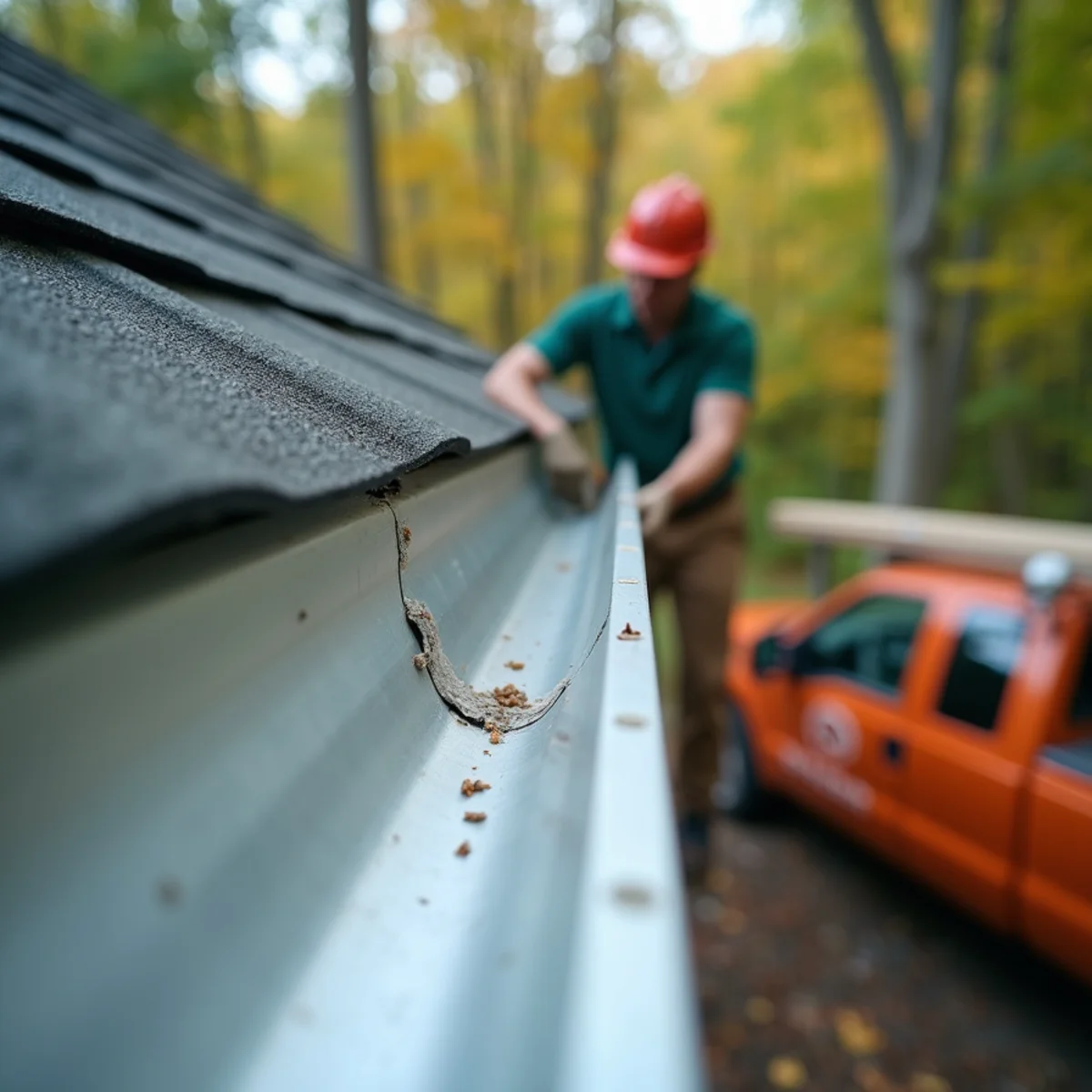
1. Fascia Separation & Sagging Runs: Walk the entire drip line. Look up along each eave for sections that have pulled away from the fascia board. If you see daylight between the back of the gutter and the wood trim, fasteners have failed or the fascia itself has split under the immense weight of wind-driven rain. 2. Tree Limb Crushes & Creased Troughs: Examine roof valleys and gutter eaves beneath overhanging tree limbs. Even a small falling branch can crush an aluminum trough, creating an internal dam that causes subsequent rains to cascade directly over the outer lip. 3. Corner Miter & Seam Ruptures: Check every box miter, strip miter, and end cap. High wind pressure and hydraulic pounding frequently rupture silicone sealant seams, causing persistent leaks that rot structural corner posts. 4. Downspout Fastening & Elbow Blowouts: Verify that downspouts remain firmly anchored to exterior masonry, log, or vinyl siding with heavy-duty aluminum straps. Inspect upper and lower elbows for debris jams caused by twigs, hemlock needles, and roof grit. 5. Underground Drain Discharges & Silt Clogs: Locate the exit point of all below-grade drainage lines. During Helene, catastrophic runoff swept tons of silt, gravel, and mud into drain outlets, choking corrugated tubes and causing water to back up directly into foundation footing drains. 6. Foundation Soil Erosion & Slope Gullies: Check the ground within 10 feet of your foundation. Look for deep gouges, exposed tree roots, foundation cracks, or soil washouts near crawl space vents.
Documenting Damage for Insurance Adjusters: High Country Best Practices
Filing an insurance claim for storm-damaged gutters in Western North Carolina requires meticulous photographic evidence and precise documentation. Insurance adjusters are often overwhelmed after major regional disasters and may overlook secondary structural damage if it is not clearly presented.
To build an airtight claim: - Capture Wide and Close-Up Photos: Take wide-angle shots showing the entire elevation of your home to establish context, followed by clear close-ups of crushed gutters, pulled fasteners, water-stained fascia boards, and eroded landscaping. - Document Active Leaks During Rain: If it rains before the adjuster arrives, record short video clips showing where water is overflowing, leaking through seams, or trenching around your foundation. - Point Out Hidden Secondary Damage: Many adjusters initially write estimates covering only the replacement of the damaged aluminum trough. Make sure they inspect the wood fascia board behind the gutter, the metal drip edge flashing, the soffit vents, and the crawl space interior for moisture intrusion. - Secure an Itemized Professional Estimate: Do not rely solely on the adjuster's initial scope of work. Contact Wyatt Phelps at W.P.E.S. LLC at (321) 485-9911 for an on-site professional damage evaluation. We provide itemized, written proposals detailing material specifications, code-compliant fastener spacing, and necessary carpentry repairs.
Hidden Structural Hazards: Fascia Rot, Sub-Soffit Washout, and Foundation Saturation
When a gutter fails during a major storm, the visible dented metal on your lawn is often the least expensive part of the damage. Uncontrolled roof runoff pouring off eaves causes severe hidden structural hazards that can cost tens of thousands of dollars if left unaddressed.
First, wood fascia rot develops rapidly. When water spills behind a sagging gutter, it wicks into the end grain of rafter tails and sub-fascia framing. Within weeks, wood-decay fungi take hold, softening the structural framing. If new gutters are carelessly reinstalled into rotted wood, the fasteners will pull out during the first winter freeze.
Second, unmanaged runoff devastates mountain foundations. A 2,500-square-foot roof sheds approximately 1,550 gallons of water for every single inch of rainfall. During Helene's 20-inch deluge, that single roof discharged over 31,000 gallons of water! When downspouts are crushed or disconnected, that ocean of water dumps directly against basement walls and crawl space curtains. Hydrostatic pressure forces moisture through concrete masonry blocks, saturating insulation, fostering black toxic mold, and destabilizing sloped hillside footings.
Upgrading for Future Storms: 6-Inch Seamless Aluminum, Heavy Hangers, and Rigid Underground Drainage
Rebuilding after a severe storm provides a vital opportunity to harden your home against the next extreme weather event. Restoring the exact same undersized, spike-hung gutters that failed during Helene guarantees history will repeat itself.
W.P.E.S. LLC recommends three essential structural upgrades for every High Country mountain home:
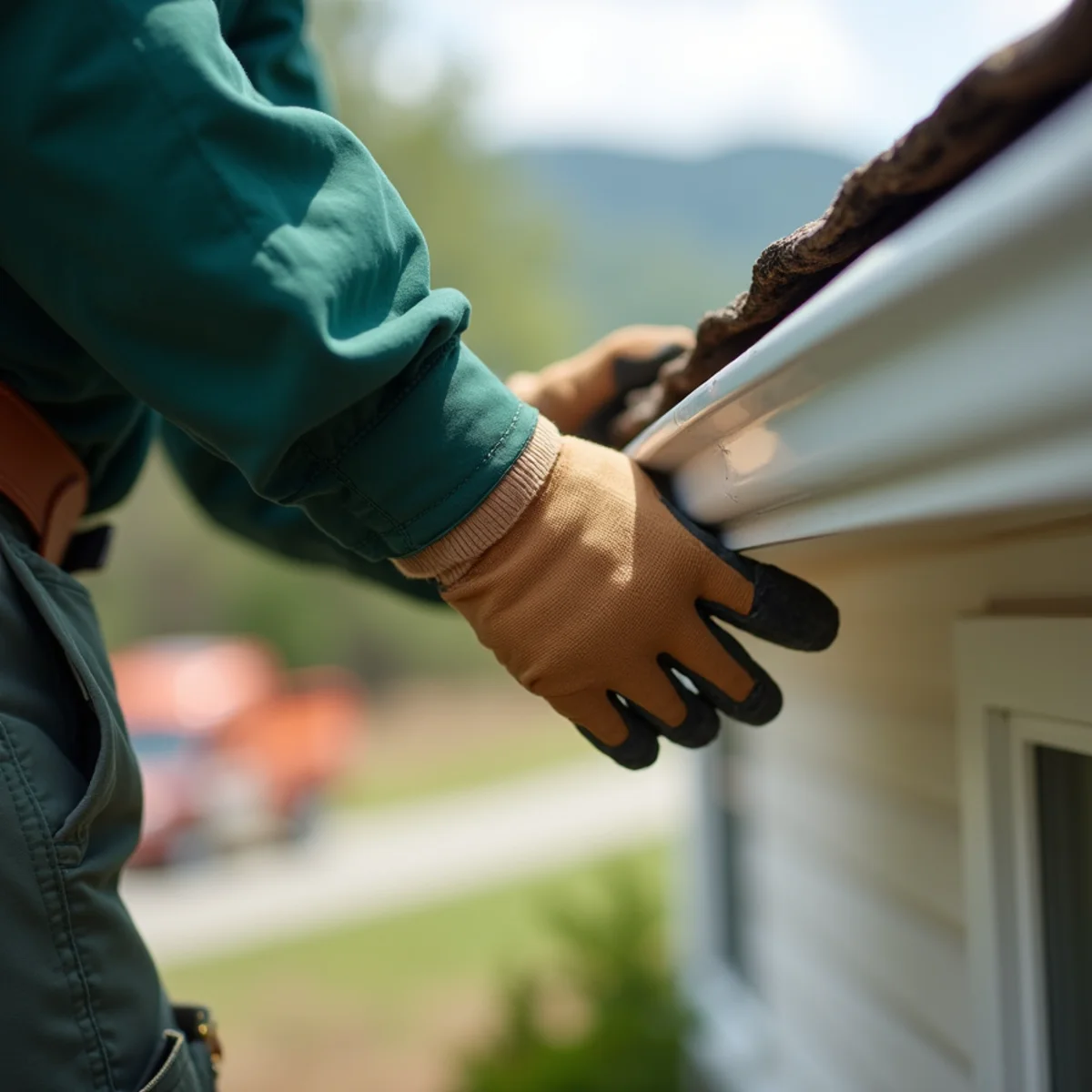
1. Upgrade to Commercial 6-Inch Seamless Gutters: Standard 5-inch residential gutters carry only 1.2 gallons of water per foot, while 6-inch K-style gutters carry over 2.0 gallons per foot—a massive 40% increase in hydraulic capacity. Paired with oversized 3x4-inch commercial downspouts, 6-inch systems evacuate torrential rainfall without backing up.
2. High-Wind Internal Screw Hangers: Eliminate outdated nail spikes entirely. We secure gutters using heavy-duty hidden aluminum brackets fastened with 2-inch zinc-coated hex head screws driven directly into rafter tails every 18 to 24 inches. This high-density spacing provides exceptional resistance against high winds, fallen branches, and winter snowpack.
3. Rigid Smooth-Wall PVC Underground Drainage: Replace fragile black corrugated flex-pipe with heavy-duty Schedule 40 or SDR 35 rigid PVC pipe buried below grade. Smooth-wall PVC resists crushing under saturated soils and tree roots, maintains optimal downhill slope velocity, and features inline cleanout ports to ensure lifetime serviceability.
Post-Storm Recovery Action Plan: Timeline from Emergency Triage to Final Inspection
Follow this practical step-by-step action plan to navigate your home's exterior storm recovery:
- Days 1–3 (Emergency Stabilization): Detach hanging, wind-whipped metal sections that threaten windows or personal safety. Cap open downspouts and attach temporary flexible tubing to route water at least 10 feet away from crawl space walls. - Days 4–7 (Documentation & Claims): Photograph all damage from multiple angles. File your insurance claim and schedule an on-site damage assessment with W.P.E.S. LLC. - Weeks 2–3 (Carpentry & Preparation): Remove soft or rotted fascia boards. Sister damaged rafter tails with structural lumber, wrap framing in protective aluminum trim, and inspect drip edge flashing. - Weeks 3–4 (Custom Fabrication & Installation): Have W.P.E.S. LLC custom roll-form continuous .032 seamless gutters on-site, install surgical micro-mesh leaf filters, and excavate rigid PVC downspout drainage lines. - Ongoing (Seasonal Verification): Check gutter flow and cleanouts after the first post-installation heavy rainfall to verify 100% positive drainage away from your mountain foundation.
Wyatt Phelps
OwnerWyatt Phelps founded W.P.E.S. LLC in 2020 in Elk Park, NC. Serving homeowners and property managers throughout Avery, Watauga, and the Blue Ridge mountains with continuous seamless gutters, micro-mesh guards, and slope drainage.
Call Wyatt Directly: (321) 485-9911Common Questions
Frequently Asked Questions
Clear, practical answers about High Country gutters, snow loads, leaf guards, and exterior drainage.
Most homeowner insurance policies cover gutter and exterior damage caused by sudden storm events, such as high winds, falling tree limbs, and hail. Pre-existing wear, neglect, or gradual rust are generally excluded. Having a detailed, photo-documented estimate from W.P.E.S. LLC helps substantiate your claim.